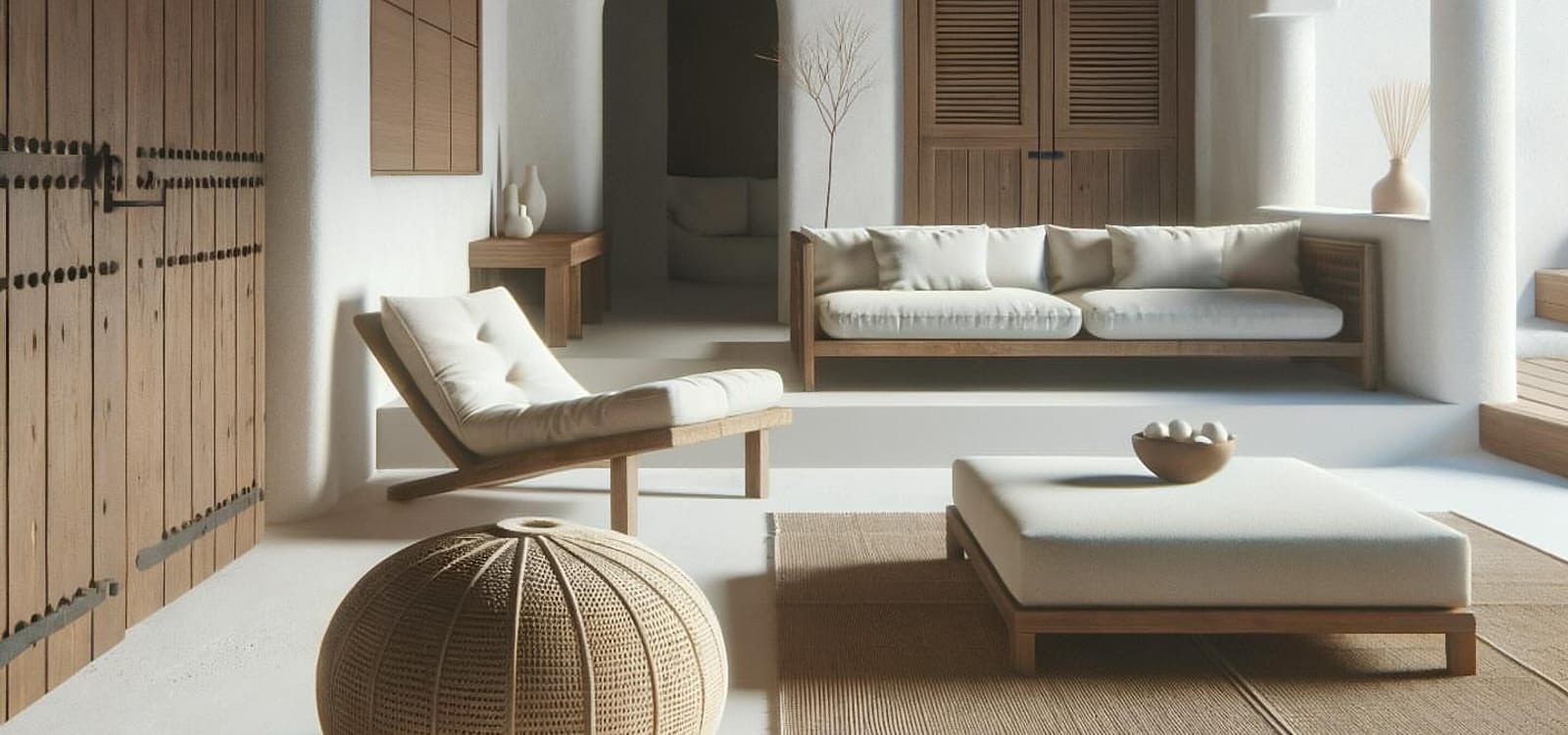
Color gets most of the attention in a design consultation, but finish is the decision that actually shapes how a surface feels underfoot and looks up close, day to day. Microcement isn't one texture — it ranges from a fully smooth, honed surface to a visibly hand-troweled one with real depth and movement in the trowel marks. Neither is objectively better. The right one depends on what the room does, what light hits it, and how particular you are about keeping a surface looking freshly finished.
Smooth and Honed: Where Precision Matters
A smooth, honed finish is achieved by working the final coat with tighter, more controlled trowel passes and then refining it further during the sealing stage, which produces a surface with minimal visible texture — closer to polished concrete or a fine plaster than to a rustic trowel finish. It's the finish we recommend most for kitchen countertops and islands, because a flat, consistent surface is easier to wipe clean in one pass and doesn't have texture that can trap crumbs or grease in the way a heavier trowel finish can. It also tends to be the choice for bathroom vanities and shower walls where people want the surface to read clean and current rather than tactile.
The tradeoff with a smooth finish is that it shows everything — water spots, fingerprints, faint scratches from years of use are all more visible on a flat, low-texture surface than they would be on something with more depth to hide behind. That's not a flaw exactly, it's just a maintenance reality worth knowing going in, especially in a kitchen that sees heavy daily use.
Textured and Hand-Troweled: Where Character Holds Up Better
A more textured, hand-troweled finish keeps visible movement in the surface — subtle ridges and variation left by the trowel that catch light differently depending on the angle you're viewing from. Floors and walls tolerate this kind of texture well, and in a lot of cases it's the better practical choice, since the texture does a lot of work hiding everyday wear: foot traffic marks, minor scuffs, and the kind of fine surface variation that shows up over years of normal use. It's also generally a better pick underfoot in a bathroom or shower, since some texture adds a bit more traction than a glass-smooth surface, particularly once we've worked an anti-slip additive into the sealer.
The visual effect is different too — a textured finish reads warmer and more handmade, which suits a lot of the Spanish revival and Mediterranean-influenced homes we work on around Los Angeles, where a dead-flat, glassy surface can feel out of step with the rest of the architecture.
Matching Finish to How the Room Gets Used
The clearest way to decide is to think about what actually happens in the room. Kitchens where people are wiping down counters multiple times a day lean toward smooth, since flat surfaces clean faster and show fewer trapped particles. Living rooms, hallways, and bedroom floors can tolerate — and often benefit from — more texture, since they see foot traffic rather than food prep and the texture helps mask everyday wear rather than making it stand out. Bathroom floors sit in between: enough texture for safe footing when wet, without going so heavy that it's hard to keep clean.
Light in the Room Changes How a Finish Reads
A smooth finish under strong, direct light — a south-facing kitchen with a big window, for instance — reflects that light evenly and can look striking, almost like a still pool of color. That same smooth finish in a dim, low-light powder room can look flat and a little lifeless without anything to catch the eye. Texture does the opposite: it needs some directional light to really show its depth, so a heavily textured wall in a windowless hallway with only overhead lighting won't show off the trowel work the way it would near a window with raking afternoon light. We walk this through with actual samples on-site, in the room's real lighting, before finalizing a finish, because photos and showroom lighting rarely tell the full story.
Being Honest About Maintenance Tolerance
Some clients want a surface that looks freshly wiped down at all times and don't mind a bit more upkeep to get there — that's a smooth finish, kept on a tighter cleaning routine. Others want something that looks good without fussing over every water spot, and that's where texture earns its keep, since it's naturally more forgiving between cleanings. Neither preference is wrong, but it's worth being honest with yourself about which one you actually are before committing to a finish for a floor you'll be living with for the next decade or two.
Curious how these finishes look room to room? See real examples across kitchens, bathrooms, and living spaces.
Explore Indoor Living