

Indoor Living
One Finish, Every Room in the House
Floors, walls, kitchens, and bathrooms — all coated in the same continuous material, all installed by the same crew, over what's already there.
Most of our indoor work starts in one room and ends up touching two or three. Once a client sees microcement running seamlessly from a hallway floor into a bathroom with no transition strip, they usually want to know where else it can go. Here's where it works best.

Floors
The most requested surface, and the simplest to justify.
Microcement floors go down over your existing tile, wood, or concrete slab at 2 to 3mm thick — up to 1/8 of an inch depending on the system and layer count — no demolition, no leveling compound, no three-week tear-out. The result is a single unbroken surface with none of the grout lines that collect dirt in a normal tile floor. We install it in living rooms, hallways, entryways, and open-plan spaces where a continuous floor plane makes the whole room read larger.
Common Questions — Floors
Yes. It conducts heat evenly across the surface and doesn't have the expansion issues tile grout can develop over a heated slab.
Between 2 and 3 millimeters for a standard install, and up to 1/8 of an inch depending on the system applied and how many layers go down — still thin enough that it rarely affects door clearances or transitions into adjoining rooms.
Walls
A feature wall that doesn't need a frame around it.
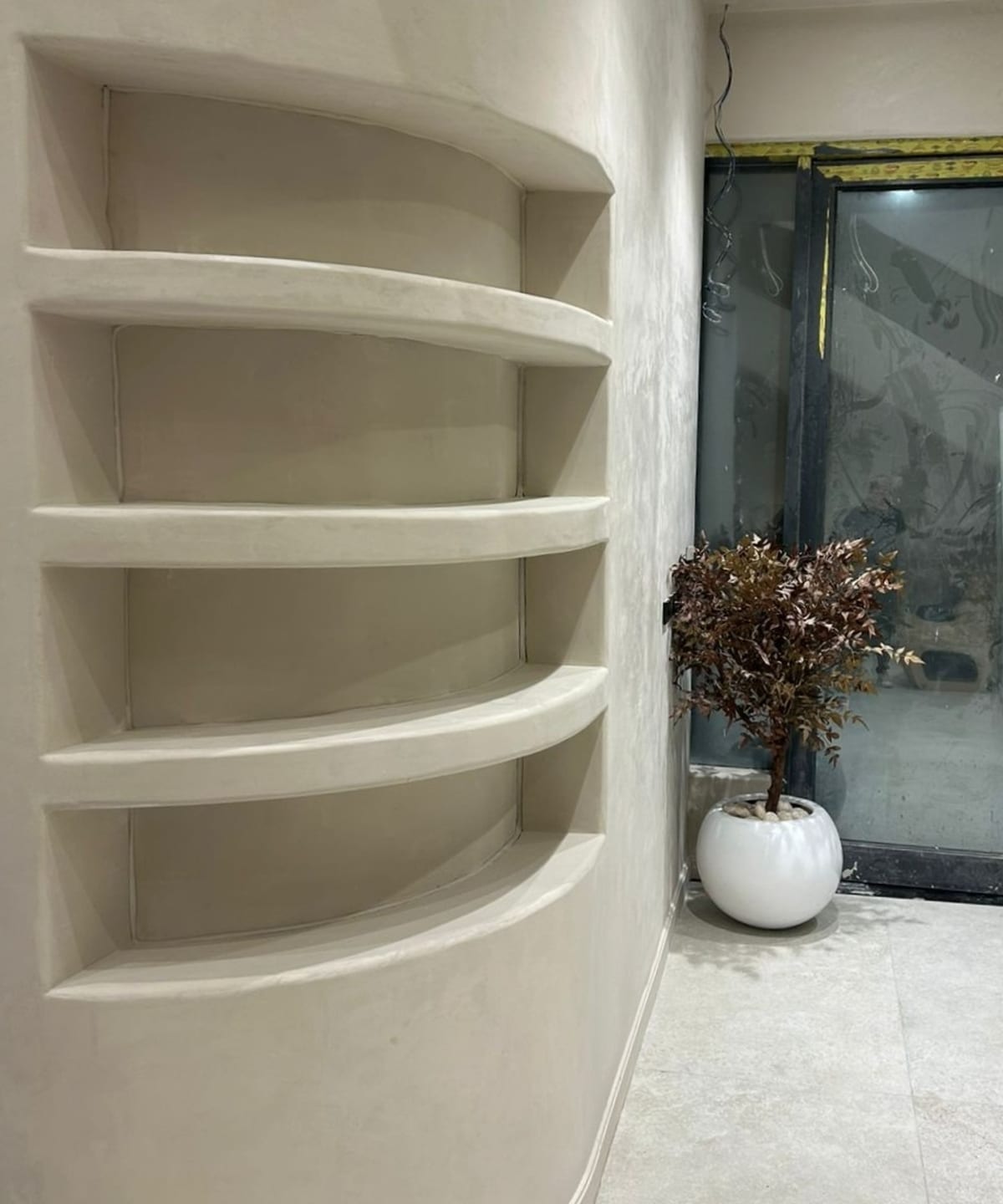
Applied to drywall or existing plaster, microcement walls carry a soft, hand-troweled texture that reads completely differently from paint or wallpaper — and unlike tile, there's no grid of joints breaking up the surface. We use it most often behind a bed, along a fireplace wall, or continuing straight off the floor to blur the line between the two entirely.
Common Questions — Walls
Yes, though we typically use a lighter sealer build on walls outside of wet areas, since they don't take the same foot traffic or standing water a floor does.
Absolutely — a single feature wall is one of our most common wall requests, usually behind a bed or a fireplace.
Bathrooms
Where seamless actually earns its keep.
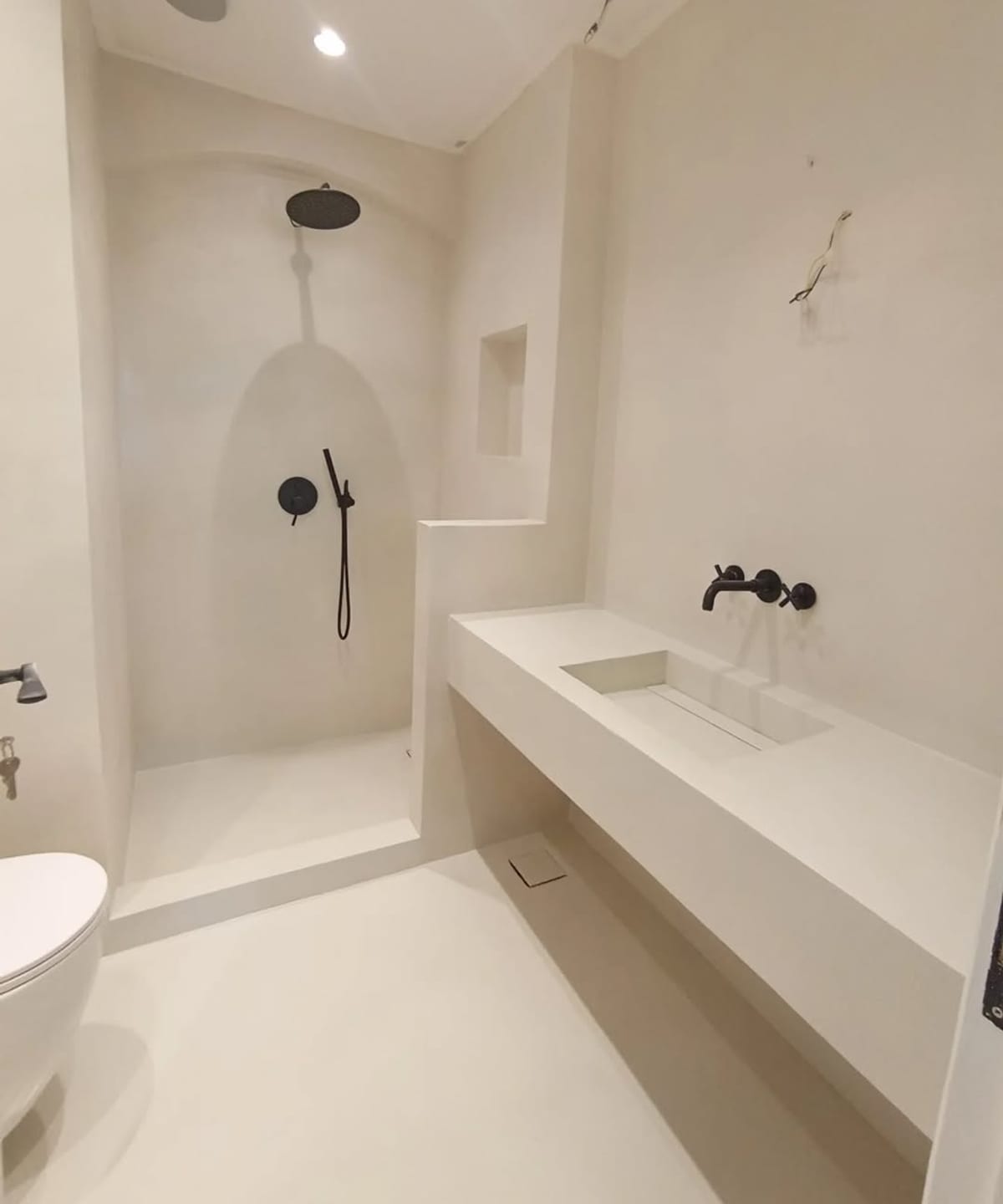
A bathroom has more joints than any other room in the house — floor to wall, wall to shower, tile to grout to caulk, all of it eventually failing at different rates. Microcement replaces that patchwork with one sealed surface across the floor, walls, and vanity surround. It's also where we see the fastest turnaround: most bathrooms are done in 3 to 5 days.
Common Questions — Bathrooms
Usually the toilet, yes, since we run the microcement underneath it rather than cutting around the base. Vanities can sometimes stay depending on how they're mounted — we'll confirm during the walkthrough.
Light foot traffic is usually fine within a day or two, but we ask you to hold off on hot showers and standing water until the sealer has fully cured, typically about a week.
Showers
No grout means no mildew line to scrub.
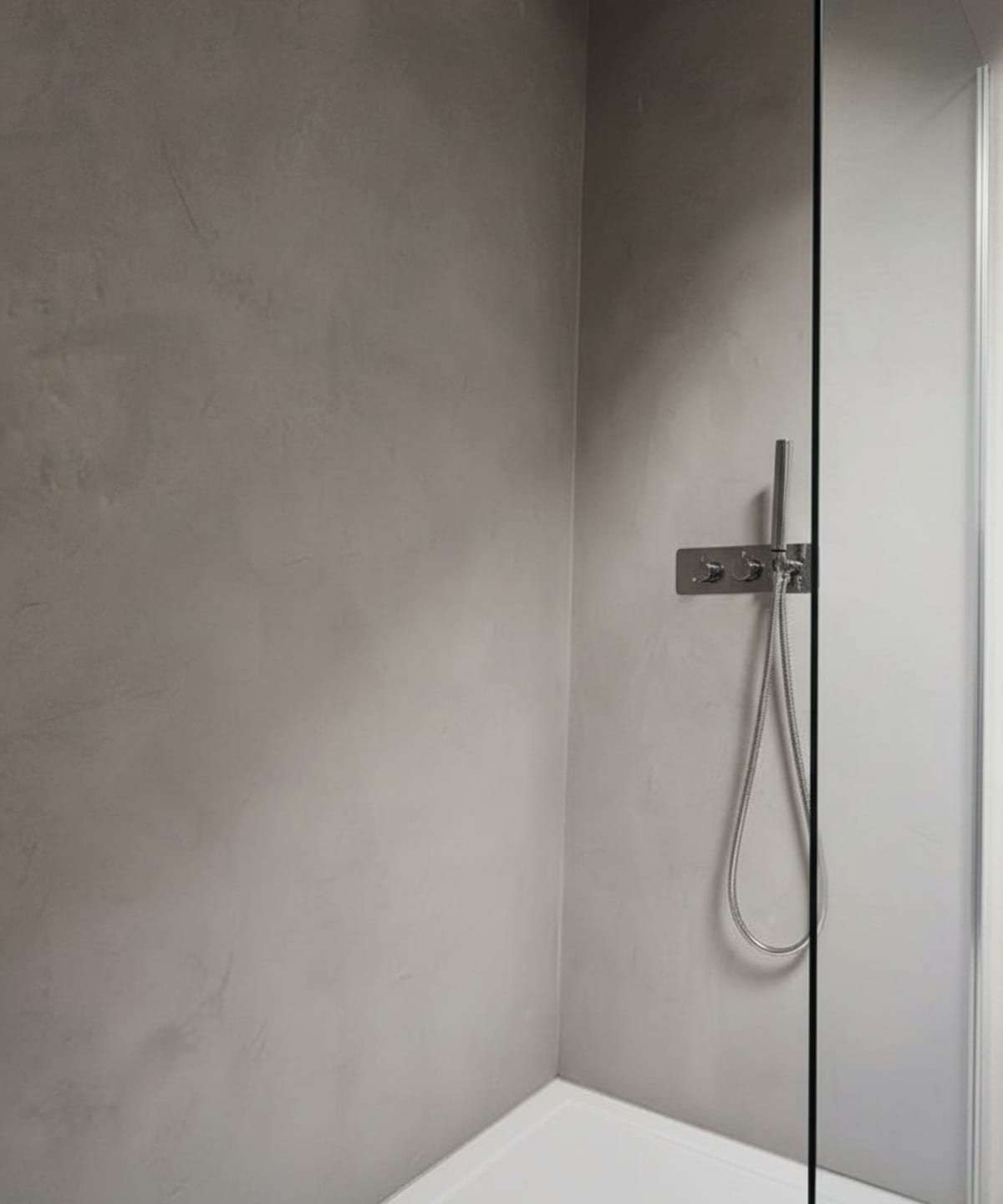
Showers take the most water abuse of any surface in the house, which is exactly why grout fails there first. We run microcement continuously from the shower floor up the walls and finish it with a waterproof sealer rated for constant wet exposure. The niche, the curb, the bench if you have one — all one material, no caulk joints working loose over time.
Common Questions — Showers
Yes — the membrane goes in first, the same as it would under tile, and the microcement and sealer work with it rather than replacing it.
We add an anti-slip additive to the sealer on shower floors specifically, so it isn't the flat, glassy texture people sometimes picture.
Kitchens
Floor, backsplash, and counter in one continuous material.
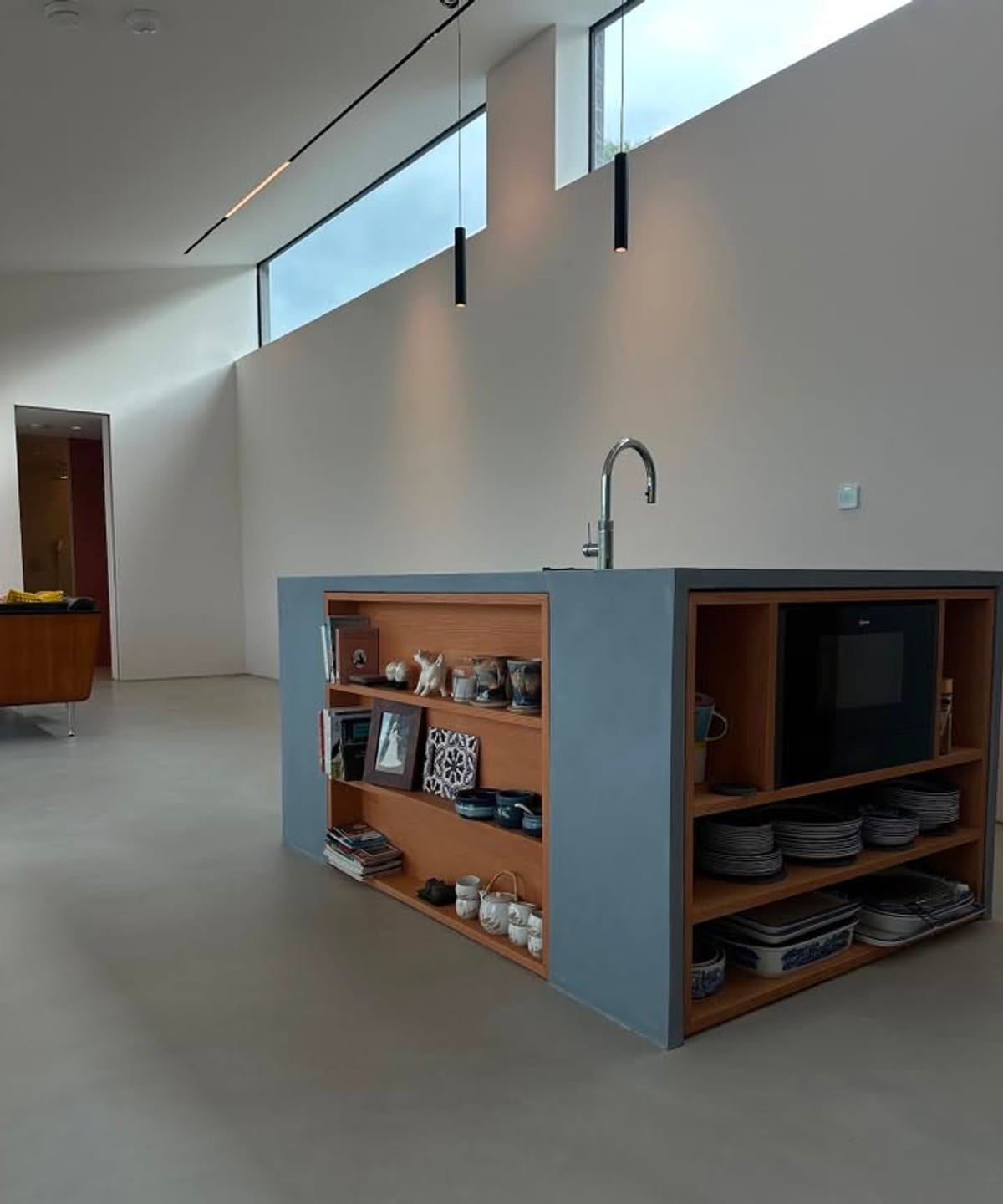
Kitchens are where microcement's seamless quality is most visible day to day — a floor that runs into a backsplash that matches the counter, with no seams for grease and crumbs to collect in. It handles the traffic and spills of daily cooking without the maintenance grout demands, and because it's heat-tolerant once sealed, it holds up fine near a range or oven.
Common Questions — Kitchens
Yes, sealed microcement tolerates the ambient heat near a range fine — we'd just recommend a trivet for anything coming straight off the burner, the same advice we'd give for stone.
Well, generally — it's a dense, cement-based surface, not a soft or brittle one. Isolated impacts are far less likely to chip it than tile.
Countertops
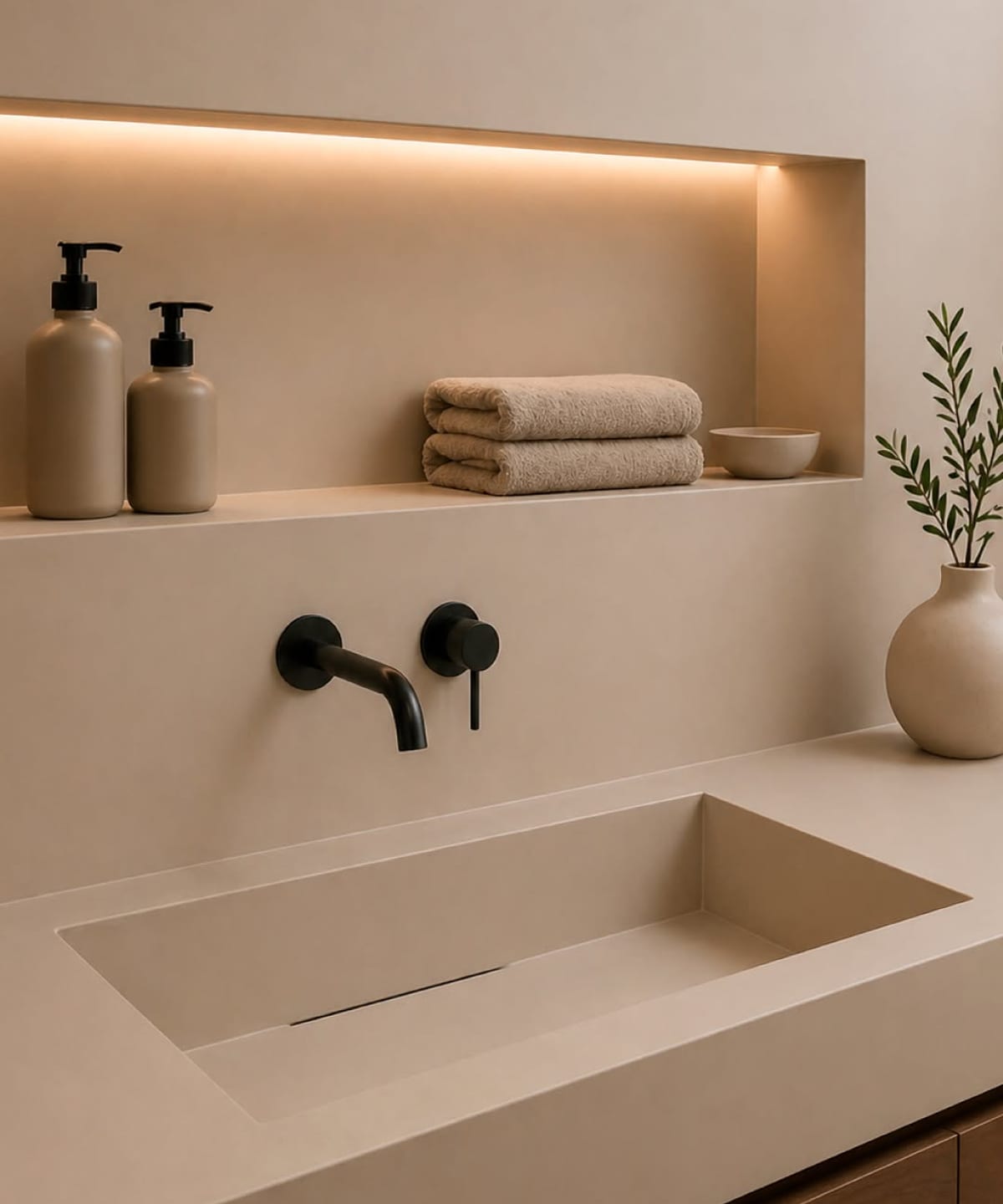
A counter that can match the floor beneath it.
We apply microcement over existing laminate or stone countertops, or build it onto new substrate for a full renovation. Because it's the same material used elsewhere in the house, a kitchen counter can carry the exact tone and texture of the floor or an adjacent wall — something you can't do by mixing quartz, tile, and hardwood. Sealed properly, it resists stains from oil, wine, and citrus.
Common Questions — Countertops
In most cases yes, since we're mixing and applying the same pigmented material — that continuity is one of the more requested combinations we do.
Close, but not identical — sealed microcement handles everyday kitchen heat fine, but we still recommend a trivet for cookware straight off the stove, the same as we'd suggest with quartz.
Stairs
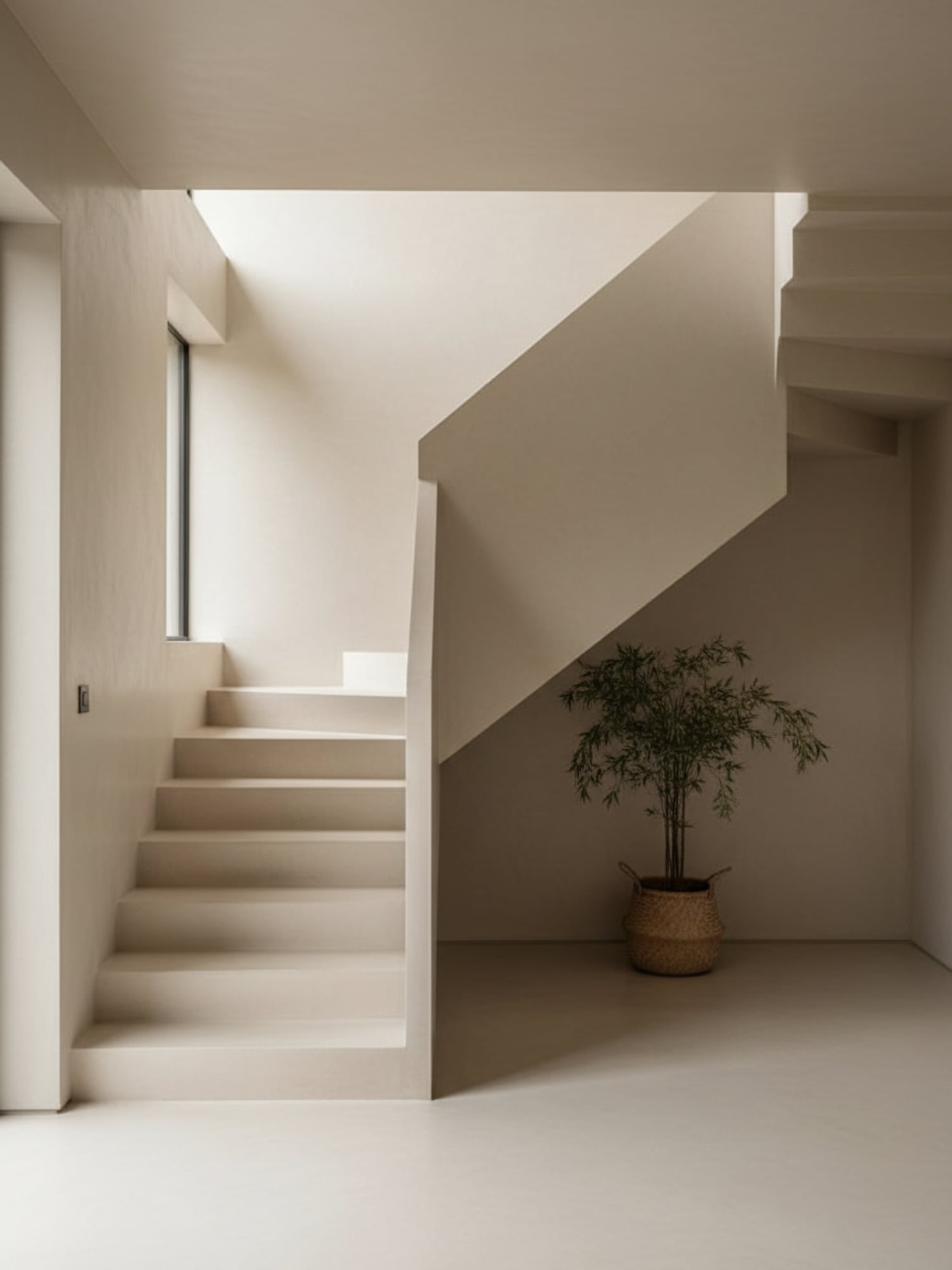
Treads and risers without a single seam between them.
Staircases usually mean dozens of grout lines or a patchwork of runner and nosing trim. Microcement wraps treads, risers, and stringers as one continuous surface, which also makes it easier to keep clean — no corners for dust and grit to collect in. We finish stairs with an anti-slip additive in the sealer, since this is one area where traction actually matters.
Common Questions — Stairs
Yes, an anti-slip additive goes into the sealer on every stair tread we finish — it's one of the few areas where we don't leave that optional.
Yes, a two-tone stair is a common request and doesn't add much to the timeline since both colors are applied during the same visit.
Furniture & Custom Pieces
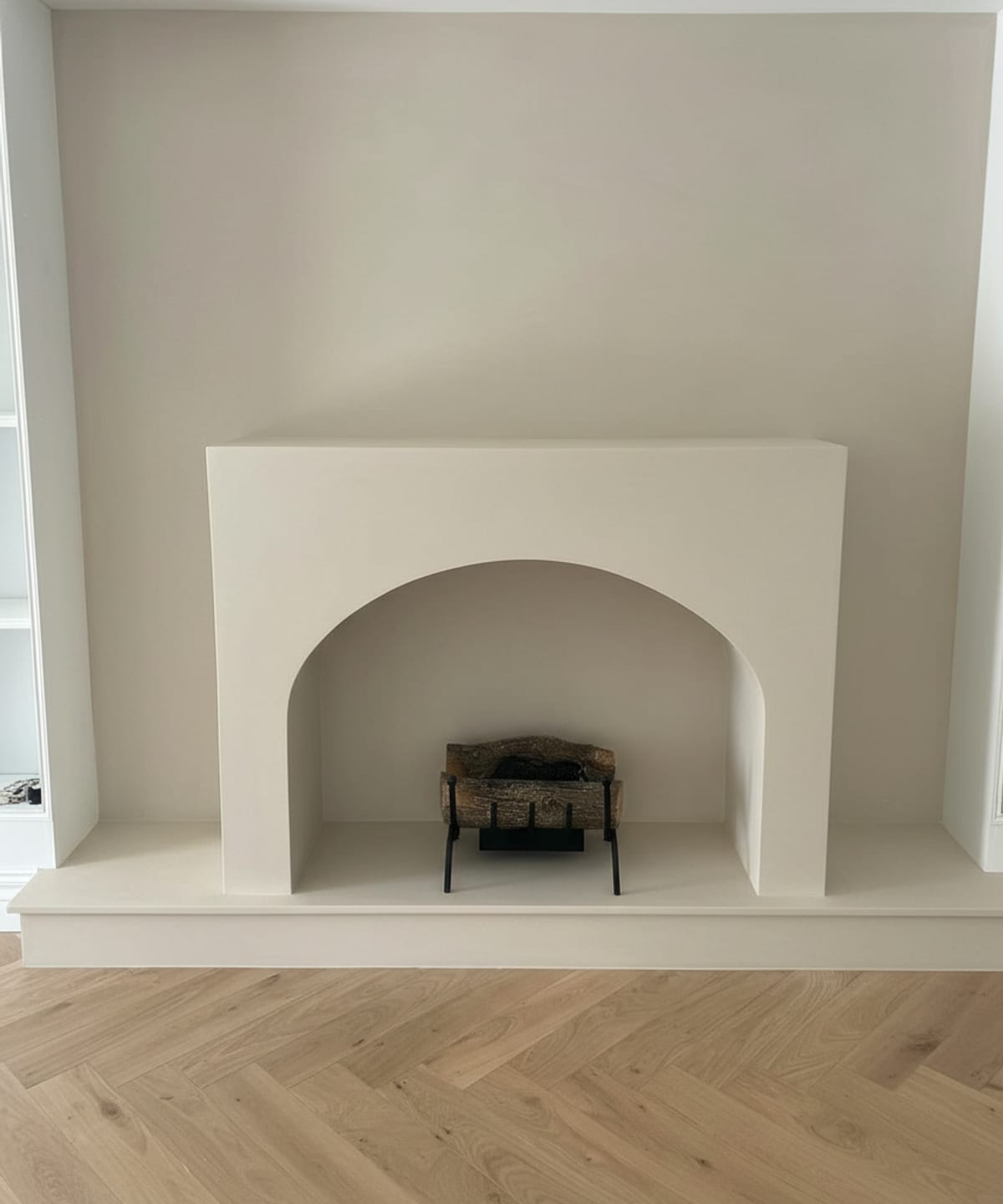
Built-ins, tables, and fireplace surrounds.
Beyond floors and walls, we finish custom pieces in microcement — built-in benches, side tables, fireplace surrounds, floating shelves. It's a good fit anywhere you want a piece to match the surrounding architecture instead of standing apart from it, and it holds up to daily use the same way a floor does once sealed.
Common Questions — Furniture
Sometimes — it depends on the material underneath and whether it can take the prep and coating process. Send us details and we'll tell you honestly if it's a good candidate.
Once sealed, it handles daily use the same way a floor does — it's the same material and process, just on a smaller surface.